


Dentist Can’t See Any Canals in My Tooth and Wants to Extract It
I have an upper right molar tooth with a cap on it. At my six-month dental appointment, my dentist said she didn’t see any canals in the tooth and that without the canal, she would need to extract the tooth because he couldn’t do a root canal. Although I’ve taken antibiotics, the tooth is still uncomfortable. I’ve researched the issue and found information on root calcification. Could this be why my dentist can’t see the canals in my tooth? Is extraction needed? – Thanks. Bethany from Syracuse, NY
Bethany,
Antibiotics alone will not remove a tooth infection, so we are unsure about your dentist’s diagnosis. If your tooth has been painful, it would likely need root canal treatment. After you stop taking antibiotics, the pain will recur because your dentist has not addressed the source of the tooth infection.
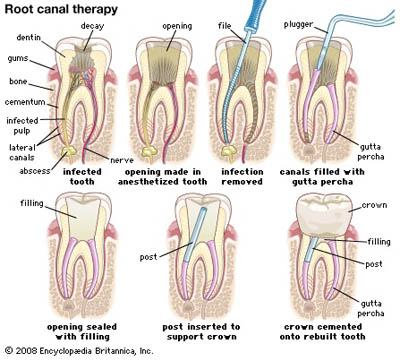
Your dentist’s inability to see canals in the tooth doesn’t mean canals don’t exist. The bone around upper molar teeth can make it challenging to see canals.
If you want to know if the tooth is savable, get a second opinion from an endodontist (root canal specialist). Also, you can ask your dentist to refer you to an endodontist. You may prefer a specialist not affiliated with your dentist to get an independent opinion of your tooth’s condition.
What is Canal Calcification?
Canal calcification is a process that occurs with age, causing a tooth’s canals to shrink. If a tooth is irritated, a buildup of dentin in the pulp chamber and canals will narrow or block the canals, making them more challenging to find on an X-ray. Narrow canals can also make root canal treatment more challenging. An endodontist’s experience and specialized tools that navigate calcified canals can benefit you.
See an endodontist before agreeing to an extraction, which requires some form of tooth replacement, such as a bridge or dental implant.
Rocky Hill, Connecticut, cosmetic dentist Dr. Thaddeus Michalski sponsors this post. Read how he strives to provide patients with some of the best dental care in Rocky Hill.
Can a Dentist Save My Tooth Without a Post and Core?
I expected my dentist to tell me I needed a root canal, but he also mentioned adding a post and core. I did not fully understand her explanation about why I needed the post and score. It seemed that she was repeating something she had read in a textbook. I am anxious about a root canal, but a post and core sound like a long appointment. When are a post and care necessary? Thank you. Noah from Detroit, MI
Noah,
Thank you for your question. Dr. Michalski would need to examine and x-ray your tooth for an accurate diagnosis, but we will explain the purpose of a post and core, when it is required, and how it affects the long-term outcome of a tooth.
What Are a Dental Post and Core?
A dental post and core are materials to strengthen a tooth weakened by decay, damage, and root canal treatment. The post is a small cylinder that supports a core. The core is a dental filling material that replaces the tooth pulp and supports a dental crown.
Why Would a Dentist Recommend a Post and Core?
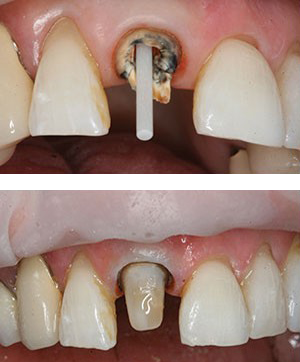
A dentist may recommend a post and core so that your tooth can support a dental crown. Sometimes, preparing your tooth for a crown requires a dentist to remove a lot of decay or damage, leaving a small amount of tooth structure. The core, or dental filling material, will replace the tooth structure and allow a dentist to cement a crown on the tooth.
The process includes these steps:
- Complete root canal therapy to remove tooth decay and infection
- Place one or two posts into the tooth
- Fill the tooth with dental material
- Build up and shape the tooth with dental bonding
- Bond a dental crown to the tooth
Will You Lose Your Tooth Without a Post and Core?
Declining a post and core may result in tooth loss for these reasons:
- You may not have enough tooth structure to support a dental crown.
- Your tooth can become weak and brittle.
- Without a post and core, you may need an extraction and dental implant
Please keep in mind that if you lose the tooth, replacing it with a dental implant and crown can cost $3,000 to $5,000 depending on these factors:
- Condition of surrounding gums and bones
- Procedures you may need in preparation for an implant
- Dental fees in your location in the U.S.
If you are unsure about your dentist’s recommendation for a post and core, schedule a second opinion with an advanced cosmetic dentist trained in root canal therapy and dental implants.
Dr. Thaddeus Michalski, a Rocky Hill, Connecticut dentist and Diplomate of the International Congress of Oral Implantologist, sponsors this post.